

Professor Chaitan Khosla is the Recipient of the 2026 Abeles and Jencks Award for the Chemistry of Biological Processes
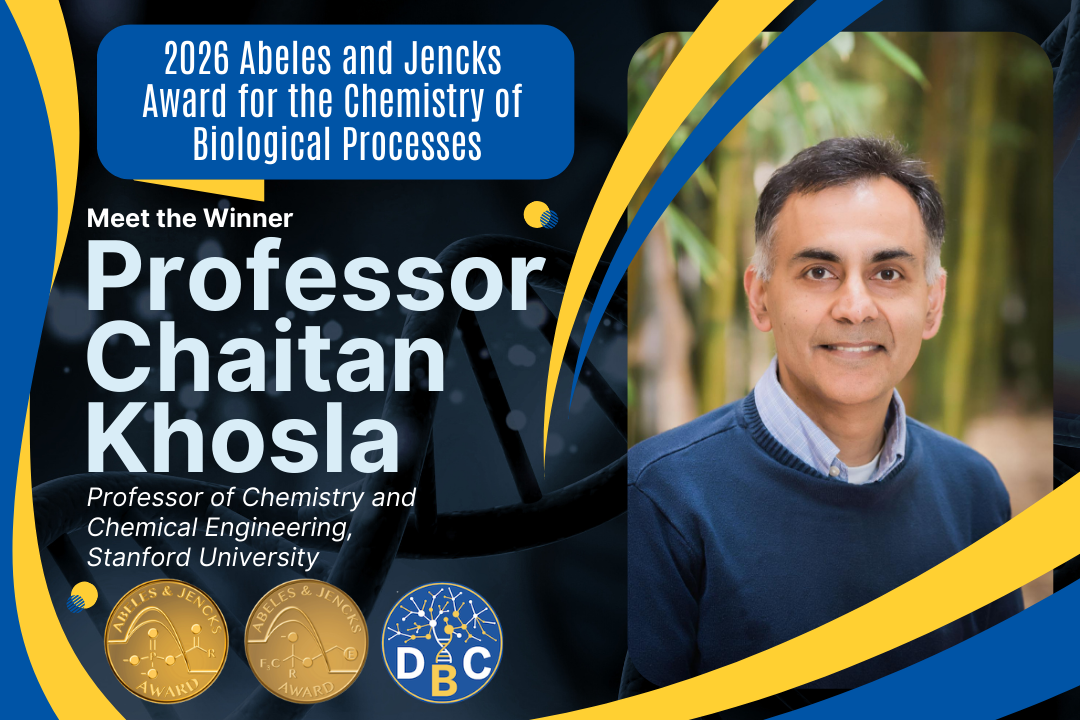
The Division is very excited to announce that Professor Chaitan Khosla is the recipient of the 2026 Abeles and Jencks Award for the Chemistry of Biological Processes. Administered by the Division of Biochemistry and Chemical Biology (BIOL) of the American Chemical Society (ACS), this award was established to acknowledge and encourage outstanding contributions to the understanding of the chemistry of biological processes, with particular emphasis on structure, function, and mechanism. Professor Khosla is being honored for his contributions to the enzymology of polyketide synthesis and Celiac Disease.
After completing his PhD in Chemical Engineering at California Institute of Technology and his postdoctoral work at the John Innes Centre, U.K., Khosla joined Stanford University as a professor in 1992. Since then, he has become a pioneer in finding and illuminating the enzymatic pathways by which natural products are synthesized. He is currently the Professor of Chemistry and Chemical Engineering at Stanford University and the Marc and Jennifer Lipschultz Director of the Stanford Innovative Medicines Accelerator. He is also the founding director of the Sarafan ChEM-H Institute, (Chemistry, Engineering, and Medicine for Human Health), which is a Stanford institute dedicated to bridging chemistry, engineering, and medicine to advance human health.
Assembly-line polyketides are a large family of enzyme complexes that mediate the biosynthesis of natural products, that include anti-infective and anti-cancer agents. Professor Khosla has sought to understand and leverage their activities. He has probed their structures, activity, and selectivity using his expertise in molecular biology and protein biochemistry. In addition, he has examined their structures and functions using biophysical methods like X-ray crystallography, NMR, SEC-SAXS, and single-particle cryoelectron microscopy. These studies revealed how a “turnstile” directs the growing polyketide chain through the enzyme complex. He has shown how weak protein-protein interactions play a vital role in the successive movement of the growing chain. He also has taken advantage of the mechanisms that govern polyketide synthesis to synthesize new derivatives. Thus, his research has wide-ranging applications in human health.
Equally as important, Professor Khosla characterized the biochemistry of gluten-induced pathogenesis in celiac sprue, a T- cell mediated inflammatory disease of the small intestine. This foray introduced biomedical researchers to the power of chemical logic and methodology in fundamental and translational human biology. Notably, he identified a causative link between the proteolytic resistance and immunotoxicity of gluten proteins and translated this insight into the discovery of an oral enzyme drug.
The Division of Biochemistry and Chemical Biology will be hosting a symposium in Professor Khosla's honor at the Fall 2026 ACS National Meeting of the ACS in Chicago, Illinois. Stay tuned for more details!